How to Find the Source of a Leaking Roof Before the Damage Spreads
A leaking roof can be misleading. Water appearing on a ceiling may suggest that the defect is directly above the damp patch, but roof leaks do not always behave so simply. Once water enters the roof construction, it can travel along underlay, timbers and other surfaces before becoming visible elsewhere inside the property.
For homeowners in Olney, Buckinghamshire, this makes accurate roof leak detection particularly important. Repairing the nearest visible tile or covering an internal stain may not resolve the underlying problem if water is entering from another location. A professional inspection should trace the route of the moisture, identify the original entry point and determine whether any surrounding roofing materials have also deteriorated.
How Do You Identify Where a Roof Leak Is Coming From?
Finding a roof leak requires more than looking for the most obvious damaged component. The internal evidence, external roof covering, junctions, flashing, valleys and previous repair areas may all provide useful clues.
The objective is to work backwards from where moisture has appeared and establish how it entered the roofing system. Once the source is understood, repairs can be focused on the actual defect before continued water ingress affects a wider area.
Start With Where the Water Becomes Visible
The first clue is usually the location where moisture appears inside the property.
This could be a damp ceiling patch, discolouration, water within the roof space or moisture around a particular junction. Recording where the problem occurs can help narrow down the investigation.
However, this location should be treated as a starting point rather than proof of where the roof has failed.
Water may have travelled before becoming visible, meaning the external defect could be some distance away.
The Internal Damp Patch May Not Be Directly Below the Leak
One of the most important things to understand about roof leaks is that water can move.
After passing through the outer roof covering, moisture may run along the underside of roofing materials or follow structural components before dripping onto the ceiling below.
This can create considerable separation between the entry point and the visible stain.
Repairing the roof immediately above an internal damp patch without further investigation can therefore result in the genuine source being overlooked.
Inspecting the Roof Space Can Provide Valuable Clues
Where the roof space can be assessed appropriately, it may reveal evidence that cannot be seen from the rooms below.
Water staining, dampness or marks along timbers can sometimes indicate the direction from which moisture has travelled. The condition of the underlay and surrounding materials may provide additional clues.
Older water marks should also be distinguished from active moisture where possible.
The aim is to establish a likely route rather than assuming that every stain identifies the current entry point.
Follow Moisture Back Towards Its Highest Point
Because water generally travels downwards after entering the roof, tracing signs of moisture towards their highest visible point can help narrow down the likely source.
For example, staining may extend along a timber before reaching an area where the roof covering or junction above requires closer examination.
This process needs careful interpretation.
The highest visible internal mark is not necessarily the exact external defect, but it can provide a useful direction for further assessment.
Check for Slipped or Missing Roof Tiles
Displaced roof tiles are among the more recognisable causes of water ingress.
A tile may have slipped partially out of position without disappearing completely. Even a relatively small movement can alter the intended overlap within the roof covering.
Missing tiles create a more obvious opening.
Where either problem is present, the surrounding tiles and fixings should also be checked. It is important to establish whether the movement is isolated or part of a wider pattern of deterioration.
Cracked Tiles Can Allow Water Through Without Looking Dramatic
A roof tile does not need to be missing to create a potential weakness.
Cracks can sometimes be difficult to identify from ground level, particularly when they are narrow or located within a less visible part of the roof. The tile may still appear to be sitting correctly alongside neighbouring materials.
Closer assessment may reveal that its condition has been compromised.
Where cracked tiles are identified near the suspected route of water ingress, their relationship with the internal evidence should be considered before repairs are planned.
Look Beyond the Tiles Themselves
A common mistake when diagnosing a pitched roof leak is concentrating exclusively on the roof tiles.
Tiles form an important weathering layer, but water can also enter around the numerous junctions and details incorporated into a roof.
A roof may have no missing tiles while still developing a leak.
The complete affected area therefore needs to be considered, including flashing, valleys, ridges and other points where different roof components meet.
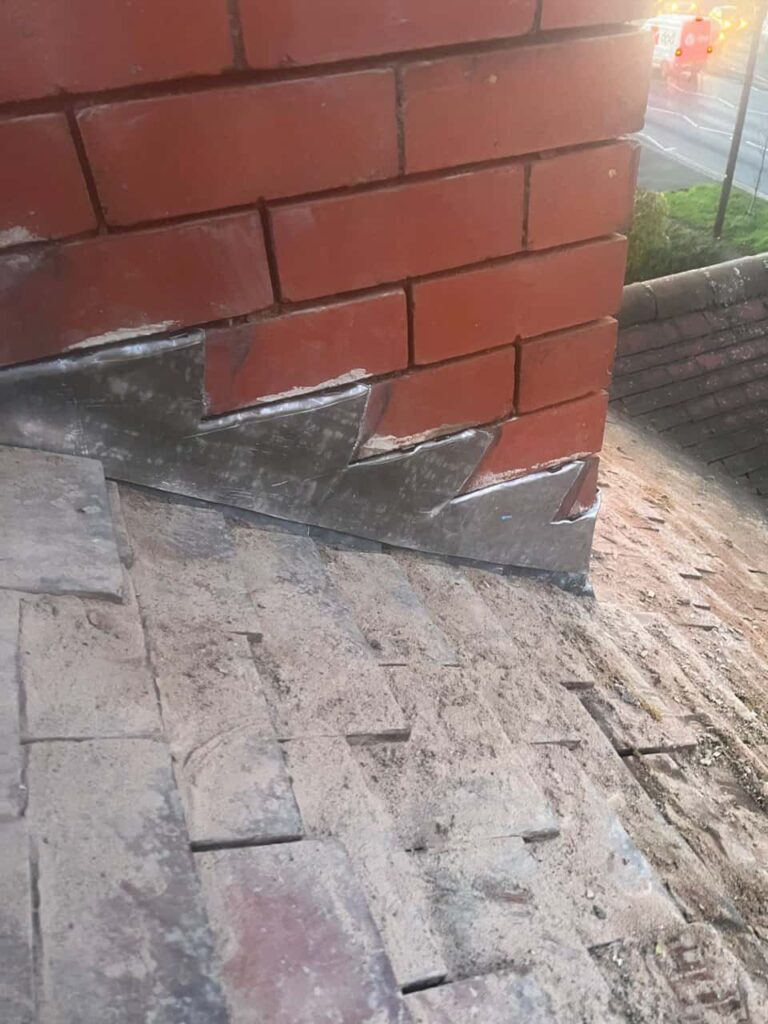
Flashing Is a Common Area to Investigate
Flashing protects vulnerable roof junctions and transitions.
If it becomes displaced, lifted or deteriorated, water can enter around the adjoining materials even when the surrounding roof covering remains intact.
Leaks associated with flashing can sometimes be mistaken for tile problems because the internal damp patch appears beneath a tiled section.
Careful inspection of the relevant junction can help establish whether the tiles are actually responsible or whether the weakness lies elsewhere.
Roof Valleys Need Particular Attention
Valleys carry water from adjoining roof slopes and can therefore handle considerable quantities of rainfall.
A defect within a valley can allow moisture to enter the roof construction, while debris or deterioration may affect how effectively water moves through the area.
Because water is deliberately concentrated into a valley, relatively small weaknesses can become important.
When internal moisture corresponds with an area close to a valley, the complete valley detail and neighbouring roof covering should be assessed.
Ridge Areas Can Also Develop Defects
The ridge is exposed to weather and forms an important junction at the upper part of a pitched roof.
Movement, cracking or deterioration around ridge components can create potential routes for moisture. Water entering high on the roof may then travel before becoming visible considerably lower down.
This can make the resulting leak difficult to diagnose from the internal stain alone.
A complete inspection should therefore consider defects above the apparent leak area rather than examining only the same horizontal position.
Roof Junctions Often Deserve Closer Inspection
Any location where the roof changes direction or meets another component deserves attention during leak diagnosis.
These areas contain additional details designed to maintain weather resistance. If materials move or deteriorate, small gaps can sometimes develop.
The defect may be less visually obvious than a missing tile but still allow water into the roof.
Professional leak detection considers these junctions systematically rather than searching only for dramatic external damage.
Consider Whether Wind-Driven Rain Changes the Pattern
Some roof leaks appear only during particular weather conditions.
Ordinary rainfall may cause no visible problem, while rain accompanied by strong wind produces an internal damp patch. This can indicate that water is being driven beneath or around a vulnerable detail from a particular direction.
The timing of the leak can therefore provide useful diagnostic information.
Knowing whether it appears during every rainfall or only under certain conditions can help narrow down the possible source.
A Leak After Prolonged Rain Can Suggest a Different Pattern
Some defects become noticeable only after the roof has been exposed to rain for an extended period.
Rather than producing immediate dripping, moisture may gradually penetrate a vulnerable area until enough has accumulated to become visible internally.
This pattern is worth noting when discussing the problem with a roofing professional.
How quickly the leak appears, where it becomes visible and the conditions under which it occurs can all help with diagnosis.
Check Previous Roof Repair Areas
If a roof has been repaired previously, the history of the affected area can provide useful information.
A new leak near an older repair does not necessarily mean that the previous work itself has failed. Adjacent materials may have deteriorated, or water may be travelling from a different location altogether.
However, previous repair areas are still worth assessing.
Understanding what work has already been completed can help avoid repeatedly treating the same visible symptom while overlooking a connected defect.
Recurring Leaks Need More Than Repeated Patching
A leak that returns after repair deserves a broader investigation.
Repeatedly applying another local patch may not solve the problem if the original source was incorrectly identified or if deterioration extends beyond the previously repaired section.
The repair history can reveal a pattern.
If moisture repeatedly appears in the same internal location despite external work, it becomes particularly important to trace the route of the water and reassess nearby roof details.
More Than One Defect May Be Contributing
Roof leak diagnosis is not always a matter of finding one single opening.
An older roof can sometimes contain several relatively small defects. Moisture entering through different points may then follow similar routes before becoming visible within the same general internal area.
Repairing only one defect may consequently improve the problem without eliminating it completely.
A thorough assessment should consider the wider condition of the affected roof section rather than stopping as soon as the first possible cause is discovered.
The Condition of the Underlay Can Matter
The outer roof covering provides the primary weathering surface, but the materials beneath also form part of the overall roofing system.
Where water passes beneath tiles, the condition of the underlay can influence how that moisture behaves. It may direct water towards another location or, where deterioration is present, allow moisture to pass further into the roof construction.
This is another reason why the internal leak location can be misleading.
The complete route between the external covering and the internal damp area may need to be understood.
Damp Timbers Can Reveal the Direction of Water Travel
Roof timbers can sometimes show staining or dampness where moisture has travelled along their surfaces.
Following these marks can help identify whether the water originated higher up the roof slope or near a particular junction.
However, historic staining can remain after an earlier leak has been repaired.
Professional assessment helps distinguish between evidence of previous moisture and indications that water is currently entering the roof.
Internal Stains Should Not Be the Only Evidence Used
A ceiling stain confirms that moisture has reached the interior, but it does not explain why.
The external roof needs to be considered alongside what is visible inside. This comparison can help connect the moisture route with potential defects in the roof covering.
Without this wider investigation, repairs can become guesswork.
Accurate diagnosis reduces the likelihood of disturbing sound roofing materials while leaving the genuine source untreated.
Do Not Assume the Largest Visible Defect Is Responsible
A damaged roof component naturally attracts attention, but the most obvious defect is not automatically the source of the active leak.
For example, a visibly cracked tile may be present while water is actually entering through a nearby junction.
The suspected defect should therefore be tested against the internal evidence and surrounding roof condition.
Professional roofing assessment is valuable precisely because it considers how the different clues relate rather than simply repairing whatever looks most damaged.
Why Finding the Source Early Matters
Continued water ingress can affect more than the original point of entry.
Moisture may spread across underlay, insulation, timbers and internal finishes before becoming obvious. The longer the defect remains unresolved, the greater the area that may be exposed to repeated dampness.
Early diagnosis can help keep the roofing repair focused.
Where the underlying defect remains localised and surrounding materials are sound, addressing it promptly may prevent a relatively contained problem from developing into more extensive deterioration.
Signs That a Roof Leak Needs Prompt Investigation
Professional assessment is worthwhile when you notice:
- new damp patches on ceilings;
- water staining within the roof space;
- moisture appearing after rainfall;
- leaks that occur mainly during wind-driven rain;
- a damp patch that becomes larger after prolonged wet weather;
- slipped, missing or cracked roof tiles;
- deterioration around flashing or roof junctions;
- signs of moisture around valleys;
- recurring leaks after previous repairs;
- several damp areas appearing within the same part of the property.
These symptoms can have different causes, which is why diagnosis should come before deciding on the repair.
A Localised Leak Does Not Automatically Mean Widespread Roof Failure
Discovering water inside a property can understandably raise concerns about the condition of the entire roof.
However, many leaks originate from a relatively contained defect. A slipped tile, damaged junction or localised area of deterioration may be repairable where the surrounding roof remains in good condition.
Equally, repeated leaks across several areas can indicate that the problem is broader.
The extent of work should therefore be determined by the actual roof condition rather than assuming either a minor repair or complete replacement before an assessment has been carried out.
Why Professional Roof Leak Detection Makes a Difference
The value of professional roof leak detection lies in identifying cause rather than simply responding to symptoms.
A roofing professional can compare the internal evidence with the external roof condition, inspect likely water-entry points and assess whether neighbouring materials have also been affected.
This allows repairs to be planned around the source of the leak.
It can also help avoid unnecessary work to sound parts of the roof while ensuring that hidden or connected deterioration is not overlooked.
Roof Leak Repairs in Olney, Buckinghamshire
At SC Roofing Olney, we understand that finding the source of a roof leak is often more complicated than identifying where water appears indoors.
The visible damp patch may be some distance from the original defect, making systematic assessment particularly important. By considering roof tiles, flashing, valleys, junctions and the internal route of moisture, the affected area can be assessed in context.
For property owners in Olney, Buckinghamshire, professional roof leak investigation can help establish what has failed and what repair is appropriate before continuing water ingress affects a wider area.
Conclusion
Finding the source of a leaking roof requires more than looking directly above the internal damp patch. Water can travel along underlay, timbers and other roofing components before becoming visible, meaning the original entry point may be elsewhere on the roof.
Slipped or cracked tiles, deteriorated flashing, valleys, ridge areas and other roof junctions can all provide possible routes for moisture. The pattern of the leak, including when it appears and how it responds to different weather conditions, can also provide valuable clues.
Identifying the cause early allows the repair to address the actual defect rather than repeatedly treating the visible symptom. Where the problem remains localised, this can also help protect surrounding sound roofing materials from further deterioration.
If you have discovered signs of a roof leak at your property in Olney, Buckinghamshire, contact SC Roofing Olney. We can assess the affected area, trace the likely source of the water ingress and recommend an appropriate roof repair based on the condition of the roof.
Call us on: 01234 860 698
Click here to find out more about SC Roofing Olney
Click here to complete our contact form and see how we can help with your roofing needs.